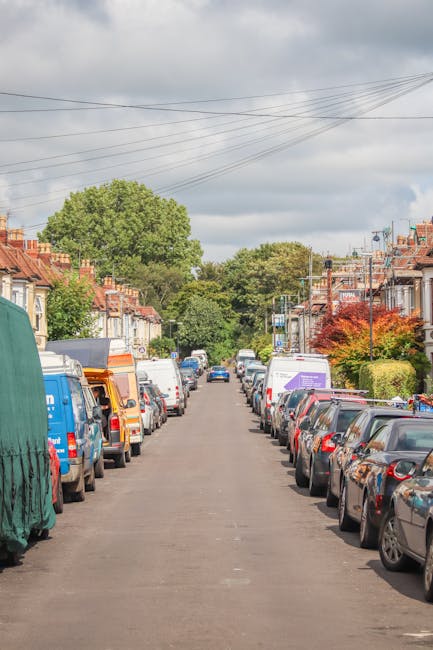
Removals guide Hertford Road Enfield access and parking
If you are planning a move along Hertford Road in Enfield, the biggest headache is often not the lifting or the packing. It is the access. Tight streets, buses, parked cars, awkward frontages, and the constant question of where the van can actually stop can turn a straightforward move into a bit of a scramble. This Removals guide Hertford Road Enfield access and parking is here to help you plan sensibly, avoid rushed decisions, and make moving day feel far more manageable.
Truth be told, a good move in this part of North London is usually won or lost before the boxes are even loaded. A sensible parking plan, a clear idea of building access, and a realistic loading strategy can save time, money, and stress. Below, you will find practical steps, common pitfalls, local considerations, and a few hard-won reminders that tend to matter more than people expect.
Contents
- Why access and parking matter on Hertford Road
- How the moving process works in practice
- Key benefits and practical advantages
- Who this is for and when it makes sense
- Step-by-step guidance
- Expert tips for better results
- Common mistakes to avoid
- Tools, resources and recommendations
- Law, compliance, standards, or best practice
- Options, methods, or comparison table
- Case study or real-world example
- Practical checklist
- Conclusion
- Frequently asked questions
Why Removals guide Hertford Road Enfield access and parking Matters
Hertford Road is one of those corridors where moving plans need a bit of local realism. On paper, a van arrives, everything gets loaded, and off you go. In practice, access can be affected by traffic flow, narrow sections, parked vehicles, side streets, pedestrian activity, and the simple fact that a large removal vehicle needs room to manoeuvre safely.
Parking matters because removals are not a quick in-and-out job. You usually need the vehicle to stay close to the entrance for long enough to carry bulky furniture, fragile boxes, and awkward items without repeated long walks. If the van has to park too far away, delays build up fast. If it cannot stop safely at all, you may need a fallback plan. Not ideal. Not fun either.
For flats, maisonettes, terraces, and busy mixed-use stretches, the problem is often not just the street itself but the exact point where loading can happen. A flight of stairs, a narrow hallway, a basement flat, or a shared entrance can all change how the move works. That is why a careful access check is not a nice extra. It is part of the job.
Key point: the more tightly you plan access and parking, the more smoothly the whole move tends to go. Simple, but absolutely true.
If you are comparing move types or trying to understand what support is available, pages such as removal services, home moves, and flat removals can help frame the kind of help you may need.
How Removals guide Hertford Road Enfield access and parking Works
The practical process is usually straightforward, but every move has its own little quirks. First, you identify the property type and the street layout. Then you work out where the vehicle can stop, how long it can stay there, and whether the load-out route is clear enough for bigger items. If you are moving from a flat above ground level, or into one, that route matters even more.
Think of the move in three layers:
- Street access - can the van get near the property without blocking traffic or creating a hazard?
- Kerbside loading - can items be carried from the door to the vehicle in a sensible distance?
- Internal access - are stairs, lifts, door widths, and shared hallways likely to slow things down?
A lot of people focus only on the van. Fair enough. It is the obvious part. But the building matters just as much. A property with a lift that is temporarily out of order, for example, can change the whole plan. Similarly, if the front door opens onto a narrow pavement with busy pedestrian flow, it may be safer to stage items inside and move them in timed loads.
Good removal teams typically ask about:
- street width and parking restrictions
- distance from property door to vehicle
- stairs, lifts, and corridor turns
- timings for permits or waiting restrictions
- large or fragile items that need extra space
- whether neighbours or building managers need notice
For bigger moves, you may also want to compare vehicle options. A smaller vehicle can sometimes be easier to position, while a larger truck may reduce the number of trips. That trade-off is not always obvious until you stand on the pavement and look down the road at 8:00 in the morning, tea in hand, wondering where on earth the space went.
Key Benefits and Practical Advantages
Good access and parking planning does more than prevent frustration. It improves the whole moving experience in ways people often only notice afterwards.
- Less time wasted - close loading means fewer carrying trips and less waiting around.
- Lower risk of damage - shorter carry distances usually reduce bumps, drops, and corner scrapes.
- Better crew efficiency - movers can work methodically instead of constantly adjusting to traffic or parking problems.
- Less disruption to neighbours - calmer loading makes the day feel more orderly and less intrusive.
- Fewer surprise costs - delays and extra labour time can be avoided if access has been planned properly.
There is also a psychological benefit, which sounds a bit soft until you are in the middle of a move. When the van is parked properly and the route is clear, everything feels under control. You can breathe. You can find the kettle. You do not end up carrying a wardrobe down a road while a cyclist rings a bell behind you. That sort of thing.
For people comparing removal support, related pages like man and van, removal van, and moving truck can help you decide which setup suits the property and volume of items.
Who This Is For and When It Makes Sense
This guidance is useful for anyone moving on or near Hertford Road, but it is especially relevant if you are dealing with one of the following situations:
- a flat above a shop or parade of shops
- a terrace with limited front parking
- a shared driveway or narrow forecourt
- a move involving heavy furniture, white goods, or a piano
- a same-day move where time pressure is already high
- commercial premises with loading constraints
If you are in a hurry, it may be tempting to assume the parking issue will sort itself out. Sometimes it does. Often it does not. A better question is: what happens if the obvious parking spot is taken? If you can answer that before moving day, you are already ahead.
This is also relevant for landlords, letting agents, and building managers who need to support tenant moves without causing friction with neighbours or other residents. The best outcomes tend to come from a calm plan, not a last-minute dash.
For business-related moves, pages such as commercial moves and office removals may be useful if your move involves equipment, desks, archive boxes, or fixed timings.
Step-by-Step Guidance
Here is a practical, no-nonsense way to approach a move with access and parking in mind.
1. Measure the route from door to van
Do not guess. Walk it. Check the distance, the paving, steps, and any awkward corners. If you are carrying wardrobes or sofa sections, look at the narrowest point, not the widest. That is usually where the trouble starts.
2. Identify possible parking spots early
Look for legal stopping points close to the property. If the obvious space is likely to be unavailable, think about a second-best option. A slightly longer carry is manageable. A blocked move is not.
3. Check whether you need a permit or local parking arrangement
Parking restrictions around London can be less forgiving than people expect. Timing windows, resident-only areas, loading restrictions, and controlled parking zones can all affect the day. If a permit or arrangement is needed, leave enough time to sort it properly.
4. Match the vehicle to the street
A very large vehicle is not always the best choice if access is tight. Sometimes a smaller van or a split-load approach makes more sense. On other moves, a larger truck is better because it cuts down the number of runs. It depends on the street and the volume.
5. Prepare the property internally
Clear hallways, protect corners, and remove trip hazards. If the entrance is cluttered with bikes, planters, or shoe racks, sort that out the day before. The moving team should not be navigating an obstacle course.
6. Brief everyone involved
Make sure family members, neighbours, building managers, or helpers know the plan. If someone is expecting a van to stop in a specific place, say so clearly. Small misunderstandings become big ones very quickly on moving day.
7. Keep a fallback plan
What if the space is occupied? What if a delivery vehicle blocks access? What if rain makes the route slippery? A backup plan might be as simple as identifying an alternative loading point or agreeing in advance how to pause and reset. It sounds cautious, but it saves time.
Expert Tips for Better Results
In our experience, the best moves along busy London roads are often the ones where the customer did the small things well. Not glamorous, but effective.
- Book the move for a quieter time of day if possible. Early starts can help before traffic and parking pressure build.
- Leave extra room near the front entrance. A clear doorway is worth more than most people think.
- Photograph the access route beforehand. This helps when describing tight spots or explaining a tricky entrance.
- Label fragile items clearly. If there is a short loading window, the team needs to identify priority boxes fast.
- Keep essentials separate. Chargers, documents, keys, and kettle items should not disappear into the back of the van.
- Use proper protective materials. Blankets, straps, and covers make a bigger difference when the walk from door to van is longer than expected.
A small but useful habit: stand outside the property five minutes before loading starts and look at the scene with fresh eyes. Does the van have a clean approach? Can another car squeeze in and block the route? Would a neighbour's bin collection affect things? You will often spot something you missed inside.
If you need support with packing, you may also want to review packing and boxes or packing and unpacking services. Those can make the whole process feel a lot more organised, especially in a tight-access move.
Common Mistakes to Avoid
Most access problems are predictable, which is the annoying part. The good news is they are also avoidable.
- Assuming parking will be fine on the day - it often is not.
- Forgetting about delivery bays or time limits - some spaces are not suitable for long loading.
- Ignoring height or width restrictions - especially on mixed-use streets or under older structures.
- Underestimating the carry distance - a few extra metres per item adds up quickly.
- Not warning the building or neighbours - this can create avoidable tension and last-minute objections.
- Choosing a vehicle that is too large for the street - bigger is not always better.
- Not planning for rain, wind, or poor light - London weather has a way of becoming part of the job.
One of the most common mistakes, honestly, is optimisim. People think, "We'll manage." Sometimes you will. But removals reward detail, not wishful thinking. Slightly annoying, yes. Still true.
Tools, Resources and Recommendations
You do not need specialist equipment for every move, but a few practical tools make access and parking issues much easier to handle.
- Measuring tape - useful for doors, corridors, and furniture sizes.
- Phone camera - take photos of the street, entrance, and parking options.
- Sticky notes or labels - keep priority items easy to identify.
- Protective blankets and wraps - reduce damage on narrow carry routes.
- Trolley or sack truck - ideal for boxed items if the route is smooth enough.
- Traffic cone or temporary marker - only where appropriate and lawful, and never to claim a space you are not entitled to use.
Useful service pages on the same site include removals, house removals, house removalists, and same-day removals. If you are moving quickly or from a complex property, these can help you see what sort of support is available.
There are also practical support pages worth knowing about if you care about trust, process, or service standards: insurance and safety, health and safety policy, and recycling and sustainability.
Law, Compliance, Standards, or Best Practice
Parking and loading around Hertford Road should always be handled with care and within local rules. Exact restrictions vary depending on the street, the time of day, and the type of bay or kerb space involved. If parking is controlled, a vehicle may only stop for loading if that loading activity is lawful under the specific conditions in force at the time.
That means the safest approach is to check local parking requirements in advance and make sure the moving plan fits them. Do not assume that a van can simply pause anywhere because the move is temporary. In London, that assumption can go wrong quite quickly.
Best practice usually includes:
- confirming any permit or loading arrangements ahead of time
- keeping entrances, pavements, and shared areas clear where possible
- avoiding unsafe obstructions for pedestrians, cyclists, or traffic
- using trained handling methods for heavy or awkward items
- following company policies on safety, damage prevention, and property protection
If your move involves shared buildings, leaseholds, or managed properties, it is wise to notify the relevant parties in advance. Not because anyone wants paperwork for its own sake, but because it prevents conflict. And nobody needs extra conflict on moving day.
For additional context on how a professional provider may handle operational and service expectations, you can review pages such as about us, terms and conditions, payment and security, and complaints procedure.
Options, Methods, or Comparison Table
Choosing the right moving approach often comes down to the street, the property, and how much needs to be moved. Here is a simple comparison that may help.
| Option | Best for | Access advantage | Main limitation |
|---|---|---|---|
| Man and van | Smaller moves, lighter loads, flexible timing | Easier to position on tighter streets | May need more trips for larger homes |
| Removal van | Typical household moves with moderate volume | Balanced capacity and manoeuvrability | Still depends on available kerb space |
| Moving truck | Larger properties or bulkier loads | Fewer trips when parking allows | Can be harder to place on narrow roads |
| Split-load approach | Moves where access is awkward but volume is significant | Can reduce pressure on a single parking spot | Needs careful coordination |
There is no universally best option. The right answer is the one that suits the access. A beautiful huge truck is of little use if it cannot get close enough to the front door. Equally, a small van is brilliant until you realise you need six runs for the sofa alone.
Case Study or Real-World Example
Here is a realistic example based on the sort of move people often face near Hertford Road.
A couple were moving from a first-floor flat above a shop into a terraced house a short distance away. The first property had narrow stairs, no lift, and limited waiting space outside. The second had front parking, but the road was busier than expected in the morning. They initially thought the move would be simple because the distance between homes was short. It was not quite that simple.
The solution was to start early, use a van that could stop close to both properties, and keep the loading sequence tightly organised. Heavy items went first, fragile boxes stayed grouped together, and someone stayed outside briefly to watch the kerb space and flag any issues. A little coordination made a big difference. The move still took effort, of course, but it stayed controlled.
What helped most was not luck. It was preparation. They had measured the stair width, checked the likely parking spot, and agreed in advance who would handle keys and access at each end. That removed the chaotic bits. Not every move will be smooth, but this one avoided the common traps.
If you are moving in a similar situation, pages like Enfield council parking permits for house removals, hidden removal charges in Enfield, and cheap man and van Enfield rates and real cost guide can help you think through the practical side and avoid surprises.
Practical Checklist
Use this before moving day. It is simple, but it covers the parts people most often forget.
- Confirm the move date and start time
- Measure doors, stairs, lifts, and key furniture items
- Check where the van can legally and safely stop
- Review any parking controls or loading restrictions
- Notify building managers, landlords, or neighbours if needed
- Clear entrances, hallways, and landing areas
- Pack fragile and priority items separately
- Keep keys, documents, and chargers in one easy-to-reach bag
- Prepare a fallback loading point if the first option is occupied
- Have water, snacks, and a little patience ready
Expert summary: the smoother the access, the faster the move; the faster the move, the lower the stress. That is the pattern, almost every time. A few minutes of planning can save an hour of hassle. Sometimes more.
Conclusion
A move on Hertford Road in Enfield does not need to be complicated, but it does need to be thought through. Access and parking are not side issues. They shape the whole experience. When they are planned well, the day feels calmer, cleaner, and much more predictable. When they are ignored, small problems snowball fast.
The best approach is straightforward: measure the route, check the parking, choose the right vehicle, and leave room for the unexpected. That is how you keep the move practical instead of chaotic. And honestly, chaotic is nobody's favourite moving style.
Get a free quote today and see how much you can save.
For a move that feels organised from the first box to the last, it helps to work with a team that understands local streets, real parking limits, and the everyday pressures that come with moving in London. A thoughtful plan goes a long way, and it makes the whole day feel lighter in the end.
Frequently Asked Questions
What is the main challenge with removals on Hertford Road in Enfield?
The main challenge is usually access, especially finding a legal and practical place for the vehicle to stop close enough to the property. Traffic, parked cars, and narrow loading areas can all make the move slower if they are not planned for.
Do I need to arrange parking before moving day?
It is strongly recommended. If the street has restrictions or limited space, arranging parking in advance or checking local loading rules can save time and reduce stress. Leaving it to chance is a bit of a gamble.
What type of moving vehicle is best for a tight street?
Often a smaller van or a flexible man-and-van setup works better on tighter streets. That said, the best choice depends on how much you are moving and how close the vehicle can safely get to the property.
How do I know if a permit is needed?
You should check the specific parking rules for the road and time of day. If the area is controlled, a permit or loading allowance may be required. It is best to verify this well before the move rather than on the morning itself.
What should I do if someone parks in the loading space?
Have a backup plan. This might mean using an alternative legal space, waiting briefly, or adjusting the load sequence. The key is to stay calm and keep the crew informed so you do not lose momentum.
Are flat moves harder than house moves on Hertford Road?
They can be, mainly because of stairs, lifts, shared entrances, and tighter loading windows. Flat removals often need a bit more coordination, especially when access to the front door is restricted.
How far can movers realistically carry furniture from the van?
That depends on the item, the team, and the property layout. Shorter carry distances are always better, but longer carries can be managed with the right planning and equipment. The real issue is not just distance, but how awkward the route is.
Can I use a man and van service for a bigger move?
Sometimes yes, especially if the job can be split into staged loads or the property has difficult access that suits a smaller vehicle. For larger homes, though, a bigger removal vehicle may be more efficient overall.
What items need extra care during a move with limited parking?
Large furniture, mirrors, TVs, pianos, and anything fragile or awkward should be prioritised. If parking is tight, these items may be more exposed during loading, so careful wrapping and a clear route matter a lot.
How early should I plan access and parking for my move?
As early as possible, ideally as soon as the move date is known. Even a quick route check and a parking review can uncover issues that are much easier to solve in advance than at the kerbside.
What if the property entrance is on a busy pavement?
That usually calls for careful loading timing and clear communication with the moving team. If pedestrians pass very close to the entrance, the load may need to be staged inside or moved in smaller runs to keep things safe and orderly.
Is it worth paying for extra planning help?
For many moves, yes. A little planning support can prevent delays, reduce damage risk, and help avoid avoidable fees. If your street is tight or your property access is awkward, it is usually money well spent.